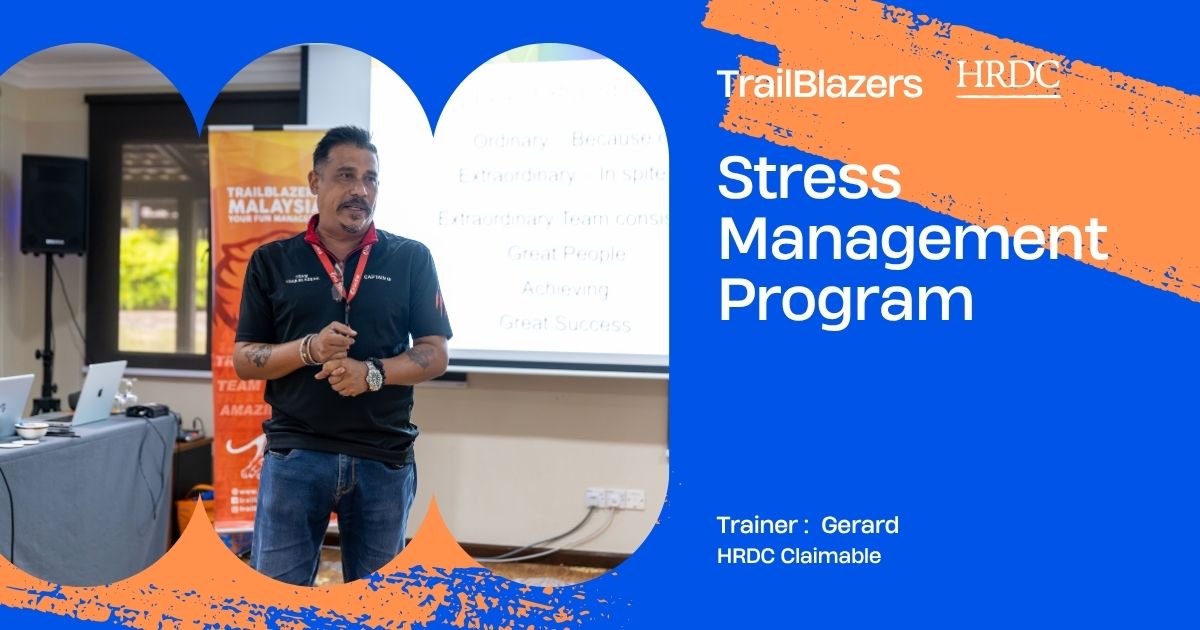
Stress Management
| Key Focus | Stress Reduction, Conflict Management, Psychological Frameworks & Physical Relieving Techniques |
| Core Models | Transactional Analysis, Johari Window, Self-Concept Model & Acupressure Points |
| Target Group | Executives, Team Leaders, Managers & All Employees facing workplace stress |
| Core Outcome | Transform conflict into growth, boost team efficiency, and master practical stress-relief tactics |
Program Overview
Stress and conflict are unavoidable aspects of organizational life stemming from differing personalities, goals, and working styles. Managed poorly, unaddressed conflict creates a culture of fear, blame, and severe physical stress that drains focus and team morale.
This program equips professionals with practical tools to manage stressors, resolve interpersonal friction, and convert conflicting perspectives into drive, workplace creativity, and organizational productivity.
Learning Outcomes
Participants completing this program will master vital self-regulation and conflict management competencies:
| Competency Focus | Participant Outcomes |
|---|---|
| Stress & Physical Tactics | Identify stress symptoms across bodily systems and execute immediate physical relief tactics like acupressure. |
| Conflict & Behavioral Styles | Apply Transactional Analysis, the Johari Window, and 5 core conflict styles to defuse tension. |
| Interpersonal Communication | Master empathy, fact-finding skills, anger de-escalation, and constructive emotional expression. |
| Actionable Stress Planning | Formulate a personal stress combat plan to enhance leadership, team resilience, and productivity. |
Training Methodology
| Methodology | Execution & Objective |
|---|---|
| Indoor Fun Activities | Gamified learning exercises designed to highlight stress triggers in real-time. |
| Practical Debriefs & Brainstorming | Guided group reflections and peer discussions on real-world workplace scenarios. |
| Interactive Lectures & Tactics | Direct instruction on behavioral models and hands-on practice of actual stress-relief techniques. |
Who Should Attend
Target Audience: Suitable for employees at all levels, managers, executives, and team leaders who operate in high-pressure environments and seek to master stress resilience, interpersonal harmony, and conflict resolution.
Program Outline
A comprehensive roadmap bridging psychological frameworks with physical stress management:
- Module 1: Conflict & Perception Fundamentals — Understanding functional vs. dysfunctional conflict and personal judgement biases.
- Module 2: Stress Mechanics & Behavioral Models — Analyzing stress attacks, Transactional Analysis, and the Johari Window.
- Module 3: Emotional Mastery & Self-Concept — Fact-finding skills, empathy, positive thinking, and the Self-Concept Model.
- Module 4: Physiological Impact & Anger De-escalation — Assessing bodily stress symptoms and overcoming communication barriers.
- Module 5: Strategic Organizational Conflict — Leveraging interveners, strategic resolution, and turning conflict into energy.
- Module 6: De-stressing Techniques & Action Plans — Practical acupressure points, self-awareness methods, and stress combat planning.
Program Modules
| Module Title | Key Topics & Content |
|---|---|
| Module 1: Conflict Triggers & Perceptions |
• Background to workplace conflicts, challenges, and stress triggers • Perceptions about conflict: functional vs. dysfunctional aspects • Personal perception and its direct effects on judgement |
| Module 2: Stress Mechanics & Behavior |
• Defining stress, stressors, and good vs. bad stress • Behavior patterns: Transactional Analysis (Parent / Adult / Child) • Self-awareness frameworks: Johari Window (Open / Blind / Hidden / Unknown) |
| Module 3: Emotional Resilience & Self-Concept |
• Working constructively with feelings, empathy, and fact-finding • The Self Concept Model and cultivating positive thinking • Evaluating 5 conflict management styles (Avoidance to Collaboration) |
| Module 4: Physical Effects & Communication |
• Physical stress symptoms (brain, heart, muscles, mouth) • Breaking through communication barriers and assessing difficult situations • Techniques for defusing anger and addressing surface beliefs |
| Module 5: Organizational Conflict Strategy |
• Harnessing organizational conflict as a source of positive energy • Strategic conflict management approaches and the value of interveners • Balancing content and relationship priorities in conflict |
| Module 6: De-stressing Methods & Action Plans |
• Practical acupressure points for immediate workplace stress relief • Advanced self-awareness techniques and mindfulness • Formulating a personalized action plan to combat stress long-term |